If you’ve spent any time around children over the past two years, chances are you’ve heard some truly baffling phrases such as “Tung Tung Tung Sahur,” “Tralalero Tralala,” or “Bombardiro Crocodilo.”
You might have also heard of Roblox games such as Steal A Brainrot, Brainrot Evolution, or a growing collection of other games inspired by these increasingly strange characters.
For many adults, the reaction is often immediate: “What on earth is this?”
And perhaps more importantly: “Is this actually good for my child?”
It’s a fair question. After all, when something literally includes the word “brainrot” in its name, it’s not exactly making a great first impression.
But after spending years working with my students through Roblox-based learning classes, I’ve found that what parents often see on the surface and what my students are actually experiencing can be two very different things. So let’s dive right in!
What Is Brainrot?
The term “brainrot” originally emerged online as a joke. People would use it to describe becoming completely obsessed with something, whether that was a game, TV show, hobby, or internet meme. Over time, the term evolved into its own style of humour.
I’d like to quickly point out that the term used in academic research is “brain rot”. It stems from the overwhelming consumption of low-quality content on social media daily and isn’t directly connected to the brainrot games.
As you might know, brainrot content is intentionally absurd. It often combines random ideas, strange characters (for instance, Frigo Camelo – a camel merged with a refrigerator), unusual sounds, exaggerated voices, and situations that make little logical sense.
The humour isn’t funny because it makes sense. It’s funny because it doesn’t. The more ridiculous the idea, the better: a dancing cappuccino ballerina, a crocodile flying a bomber plane, a shark wearing trainers.
Many parents look at these characters and immediately conclude that children must be switching their brains off and wasting their time on nonsense. But children often see something entirely different.
Fun fact: The term “brain rot” was first introduced in 1854 by Henry David Thoreau in his book Walden, or Life in the Woods. Thoreau’s reference, however, had nothing to do with technology. It described the condition of intellectual deterioration in the ability to think critically, concentrate, and be in the world appropriately.
Children Have Always Loved Nonsense
One thing worth remembering is that absurd humour is not new. Every generation has had its own version. Long before TikTok, YouTube, or Roblox, children loved silly songs, playground jokes, nonsense rhymes, cartoon catchphrases, and ridiculous made-up stories. Back in my day, I distinctly recall many parents’ intense disdain of the likes of SpongeBob SquarePants, Crazy Frog, Peanut Butter Jelly Time, Charlie the Unicorn and BADGER BADGER BADGER.
I’m sure many readers can still remember repeating phrases that made absolutely no sense to anyone outside their friendship group. The difference today is simply scale. The internet allows jokes and silliness to spread around the world almost instantly, creating shared humour that millions of children can enjoy together.
Brainrot may feel new, but children’s love of nonsense is anything but.
Why Is It So Popular?
One reason brainrot resonates so strongly with children is that it creates a shared culture. My students love recognising references that their friends understand too. Being able to identify a character, quote a joke, or laugh at a familiar meme creates a sense of belonging. Think about meeting someone new who shares your passion for a certain hobby or your music taste – you immediately have a shared interest you can connect on.
In many ways, brainrot characters serve the same social purpose that Pokémon, football teams, superheroes, cartoons, or playground games have served for previous generations.
The characters themselves are often less important than the shared experience surrounding them. When children laugh together, create stories together, and reference these characters together, they’re participating in a community. And community matters.
Creativity Hiding Behind Chaos
One of the most interesting things I’ve observed is that my students rarely stop at simply consuming these characters. Instead, they begin creating. They draw their own versions. They invent new characters. They create stories. They roleplay scenarios. They combine existing ideas into entirely new ones.
In other words, they move from audience to creator.
The fact that a character is absurd often makes it more accessible creatively. There are no rules to follow. No expectations to meet. No need for realism.
My students are free to let their imaginations run wild.
The Hidden Skills Inside Many Brainrot Games
Another common assumption is that brainrot games are drastically different from other Roblox games.
In reality, many brainrot games are simply familiar game genres wearing a very silly costume.
Underneath the memes, players often work on developing and improving valuable skills such as managing resources, trading items, planning upgrades, assessing risks and rewards, and collaborating with other players. These activities naturally involve real-life Maths concepts, strategic decision-making, long-term planning, and problem-solving, even if that’s not what initially draws players to these games.
One particularly interesting aspect is the scale of the numbers involved. It isn’t unusual for children to work with values reaching into the trillions, quadrillions, quintillions, or even beyond decillions—numbers that most adults rarely encounter in everyday life. Along the way, they also become familiar with the abbreviated notation commonly used in these games, such as “Oc” for octillion or “No” for nonillion. While these enormous values aren’t especially practical in day-to-day life, regularly comparing, estimating, and working with them helps develop number sense, mental Maths, and confidence with place value on a scale that few other activities naturally provide.
I’ve occasionally found myself laughing as a student casually announces that they “only” have 4.7 quadrillion coins and are saving up for an upgrade costing 12.5 quintillion. While those numbers may sound absurd, the confidence with which children compare, estimate, and reason about them is genuinely impressive.
The characters may be ridiculous, but the thinking behind the gameplay often isn’t. In fact, many of the skills developed through these games are the same skills found in countless other popular games that parents rarely question. If your child has ever received a Maths Anxiety Growth Report, you know how much a simple, at first glance, Roblox game can contribute to personal development.
Context Matters More Than Content
Perhaps the most important thing I’ve learned is that activities are rarely good or bad simply because of what they are. The context matters.
A child laughing with friends, building relationships, expressing creativity, solving problems, and enjoying a shared hobby is having a very different experience from a child passively scrolling through endless content.
The same character can appear in both situations. The difference lies in how children are engaging with it.
What Adults Often Miss
When parents look at brainrot games, they often focus on the surface – strange characters, loud sounds, chaotic visuals, and ridiculous names.
Perhaps the most important question is not whether a game looks silly, but what children are actually doing while they play it. Are they solving problems? Creating stories? Working towards goals? Laughing with friends? Developing confidence? Learning to persevere when things don’t go their way?
Those experiences matter far more than whether the main character happens to be a shark wearing trainers.
As adults, it’s easy to assume that because something looks silly, it must be meaningless. Yet some of the most important parts of childhood have always looked pointless from the outside – building dens, playing make-believe, collecting sticks, or inventing imaginary worlds.
Children rarely separate learning, socialising, creativity, and play in the way adults do. They simply engage with activities they enjoy and learn along the way.
A More Balanced View
Not all brainrot is created equally. Like any form of entertainment, quality varies enormously. Some games are thoughtfully designed. Others are less so. Some children engage with them in healthy ways. Others may need support in managing screen time and balance.
But I’ve found that the assumption that brainrot games are simply “rotting children’s brains” misses a much bigger picture.
What I consistently see is my students laughing, socialising, creating, imagining, problem-solving, and connecting with one another.
The games may look absurd from the outside. Yet underneath the chaos, many of the things children have always gained from play are still there. The names may have changed. The characters may be stranger than ever. But children are still doing what children have always done: finding joy, friendship, creativity, and meaning in the things they love.
Like any form of entertainment, brainrot games are best enjoyed as part of a balanced mix of activities. Reading, creative projects, outdoor play, hobbies, family time, and gaming can all coexist happily. The goal isn’t to replace everything else with brainrot games, but to recognise that enjoying them does not automatically mean children are missing out on meaningful learning or development.
“But My Child Is Constantly Talking About It!”
This is something I hear surprisingly often.
When children become interested in a topic, they often dive into it completely. Whether it’s trains, dinosaurs, Pokémon, Minecraft, football, or brainrot characters, enthusiasm can quickly become all-consuming.
While this can occasionally be exhausting for the adults around them, it’s often a sign of engagement, curiosity, and excitement rather than a cause for concern. In fact, these passionate interests frequently become opportunities for children to practise communication, storytelling, creativity, and social connection.
Rather than viewing that as a barrier, it can be an opportunity to ask questions, show curiosity, and explore something alongside your child. Take, for instance, brainrot games with lots of built-in purchases and micro-transactions. You could argue that they encourage consumerism, and you would be absolutely right. What I find important here is how you approach this topic. By asking thoughtful questions, you could discuss valuable concepts such as spending habits, advertising, value and impulse control with your Robloxian in a low-pressure manner.
Why Not Try One Together?
If you’re unsure what to make of brainrot games, one of the best things you can do is spend 15–20 minutes playing one alongside your child.
Games such as Steal A Brainrot or Escape Tsunami for Brainrots might look completely chaotic at first glance, but taking part yourself can provide a very different perspective. You’ll likely find your Robloxian enthusiastically explaining characters, strategies, goals, and mechanics, while sharing a part of their world that adults might not often see.
Steal A Brainrot is essentially a collection, economy, and strategy game disguised as a giant meme.
Players collect increasingly rare brainrot characters, earn income from them, expand their base, and make decisions about how to grow their collection. The “stealing” mechanic creates a constant risk-versus-reward element, as players can attempt to take valuable characters from others while also protecting their own.
One thing my students particularly enjoy is that the game creates lots of “What should I do next?” moments. Should they save up for a more valuable brainrot? Invest in upgrading their base? Take a chance on stealing from another player? Those decision points naturally encourage planning, strategic thinking, and weighing up different options before acting.
If you decide to try the game with your child, one small word of warning: don’t expect any special treatment! Children are remarkably competitive, and there’s a very good chance they’ll happily steal your carefully collected brainrots without a second thought. Consider it all part of the experience, and perhaps a gentle reminder that you’re entering their world this time.
Top parenting tip: If your child suggests forming an alliance, read the small print. Those brainrots may not stay yours for long.
Escape Tsunami For Brainrots is a much more action-oriented experience.
Rather than building collections and managing resources, players are trying to survive giant incoming waves while navigating increasingly difficult obstacle courses.
The gameplay is simple to understand but often challenging to master.
Many Robloxians who struggle with traditional academic challenges are surprisingly willing to fail repeatedly in games like this because the process remains fun and low-pressure.
The core difference between the two games is that Steal A Brainrot exercises the “planner” mindset, while Escape Tsunami For Brainrot focuses heavily on problem-solving.
If you are unsure how to engage with brainrot games your Robloxian loves, you might want to ask them questions such as: which characters are valuable, why one strategy is better than another, how progression systems work, what mistakes to avoid, and how to overcome difficult challenges.
As you explore the world of brainrot games together, you will notice that beneath the silly names and absurd humour, there’s a lot of thought-through structure, and it’s often the challenge, progression, mastery, and social interaction that keep players engaged. Most importantly, these games provide an opportunity to connect with your child through something they genuinely enjoy.
Even if brainrot humour never becomes your cup of tea, spending a little time exploring it together can help you better understand why it resonates so strongly with today’s generation of children.
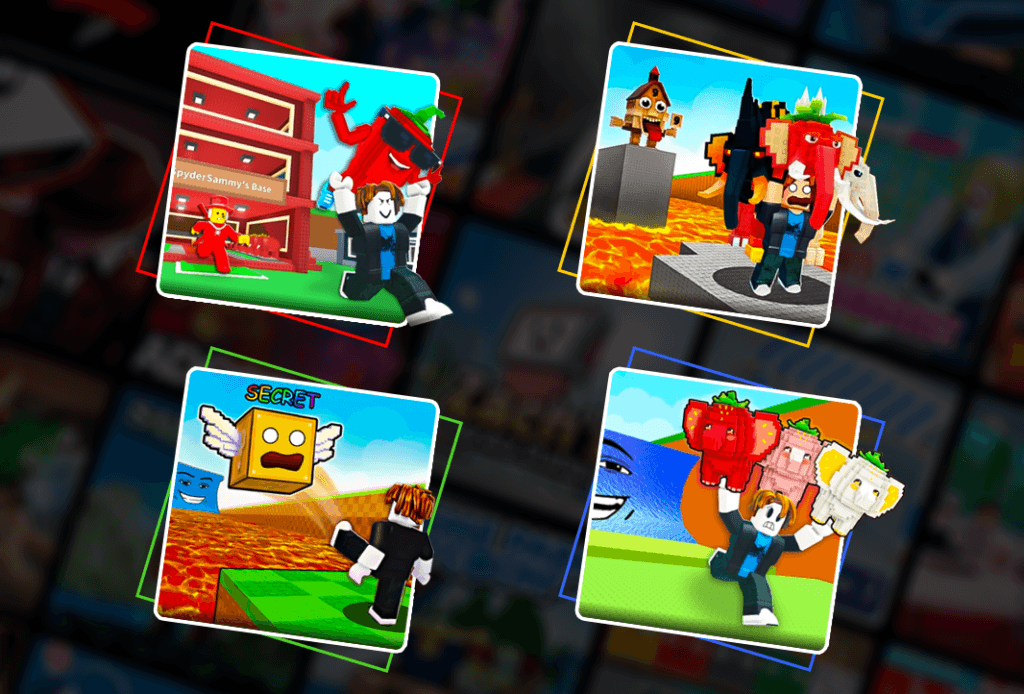
Brainrot games to try out with your Robloxians: Survive LAVA for Brainrots!, Kick a Lucky Block, Escape Tsunami For Brainrots & Steal A Brainrot.
Taking Brainrot Beyond the Screen
One of the easiest ways to make the most of a child’s online interests is to bring them into the offline world.
Children are often far more willing to engage with creative activities when those activities involve something they already love. If your Robloxian is fascinated by brainrot characters, that enthusiasm can become a springboard for all sorts of imaginative projects away from the screen.
They might enjoy:
- Drawing their favourite characters or creating Roblox avatars for them.
- Writing stories featuring characters such as Tralalero Tralala or Bombardiro Crocodilo.
- Creating comics, posters, or magazines.
- Designing collages using printed images and craft materials.
- Building characters from LEGO, cardboard, modelling clay, or recycled materials.
- Creating trading cards complete with statistics, strengths, weaknesses, and special abilities of different brainrot characters.
If your child has a favourite brainrot character, ask them to invent a brand-new one. You may be surprised by how much imagination goes into creating something as wonderfully ridiculous as a crocodile bomber pilot or a cappuccino-headed ballerina.
For many children, the most valuable part of a hobby isn’t simply consuming content but creating something of their own. A shark wearing trainers might seem ridiculous, but if it inspires a child to draw, write, design, build, or tell stories, that creativity has value regardless of where the original idea came from.
The goal doesn’t have to be limiting children’s interests to things adults find educational. Sometimes the most effective approach is to take something children already love and use it as a starting point for creativity, conversation, and learning.
When To Get Concerned
For everyone’s peace of mind, let’s touch on signs when your Robloxian might be spending too much time online and needs a break.
According to research on “brain rot” (not brainrot games, importantly), symptoms include prolonged mental and physical fatigue, poor concentration, brain fog or mental cloudiness, and diminished cognitive functions, such as decreased problem-solving ability and poor memory retention.
If you notice your child becoming more lethargic from consuming overwhelming amounts of low-quality content online, or increasingly frustrated, anxious, or upset while playing, it’s worth taking a step back. Some brainrot games, particularly those built around stealing or trading, can be highly competitive. Losing a favourite brainrot to another player or being tricked into an unfair trade can feel genuinely upsetting, especially for younger children who have invested time and effort into building their collection.
In those moments, I’d recommend focusing on helping your child regulate their emotions first and learning from the experience afterwards. Once they’re feeling calmer, you can talk together about what happened, discuss strategies for next time, and use it as an opportunity to build resilience, critical thinking, and healthy online habits. Sometimes the most valuable lesson isn’t how to get the brainrot back, but how to cope when things don’t go to plan.
How to help them emotionally regulate? After going offline, the first steps could include breathwork, meditation, practising mindfulness and spending time in nature. Pick one or two options and practice them together. Talk about noticing the sensations in their body – what did they feel when they were stuck online, and how do they feel now? Learning to notice when enough is enough is a crucial skill in the social media era, not only for children but for adults, too.
The next steps could include more restorative activities for the brain: arts and crafts, learning a language, brain puzzles, writing, outdoor adventures, swimming, dancing, spending time with loved ones, gardening, and sports.
Don’t overcomplicate these options – pick a fun puzzle, plant a vegetable and give it a name, learn how to say “thank you” in three different languages, write five things you and your Robloxian are grateful for.
Your nervous system most likely could use a break, too, so be gentle with yourself as well. You are doing your best, and I’m proud of you.
Will Your Brain Rot Too?
From what I’ve observed, no. I’ve been regularly playing brainrot games with many of my students for years now, and my Maths has only improved from it! While the brainrot humour may be absurd and the characters undeniably odd, children engaging with these games are often doing exactly what children have always done through play: laughing, socialising, creating, problem-solving, persevering through challenges, and exploring new ideas. The packaging may look stranger than ever, but underneath the memes, many of the same valuable skills and experiences that have benefited children for generations are still very much present.
The easiest way to understand brainrot may not be through articles, videos, or social media debates. It might simply be sitting down next to your Robloxian and asking them to show you their favourite game. You may come away just as confused as before, but you’ll almost certainly come away knowing a little more about what makes them laugh, think, and connect with their friends.
If I haven’t, however, convinced you to give brainrot games a shot just yet, here’s a list of Top 5 Best Maths Games on Roblox I recommend!